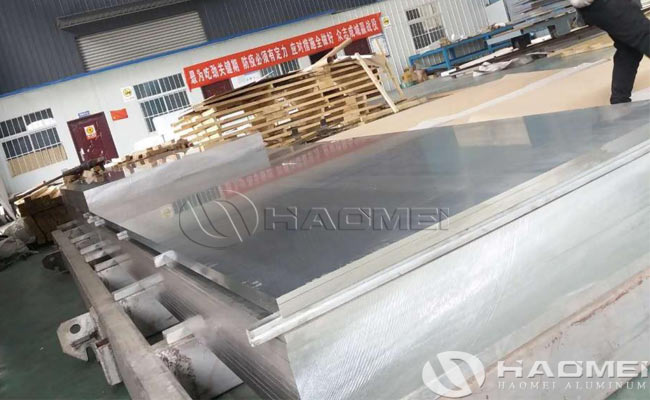
The 5083-H321 aluminum plate represents a specialized temper of the high-magnesium, corrosion-resistant 5083 alloy, optimized specifically for shipbuilding, cryogenic storage and transport, and offshore engineering. Distinguished by its exceptionally low residual stress, superior resistance to seawater corrosion, and excellent cryogenic toughness, it has become a mainstream material choice in global shipbuilding and LNG equipment manufacturing. When making inquiries, many procurement professionals tend to confuse this material with standard 5083-H32 aluminum plate. However, the core differences lie in the level of stress control and the reliability of forming for thick plates; selecting the wrong temper can lead to batch quality issues such as lamellar tearing during welding and structural deformation.
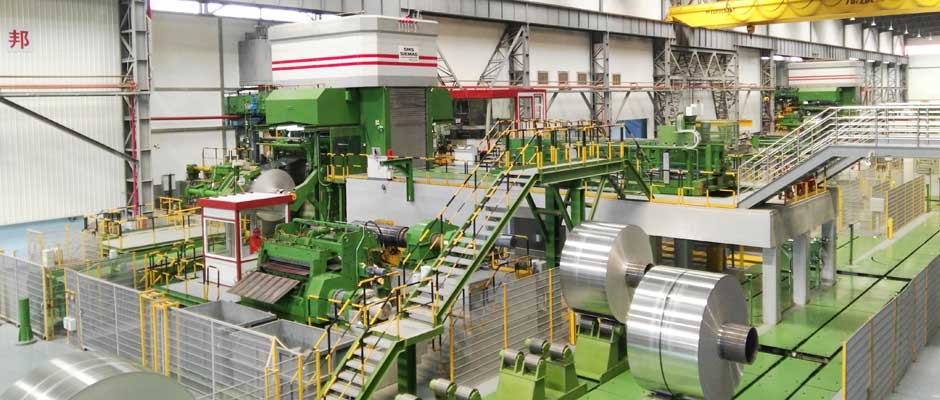
By standard definition, H321 is a specialized low-stress temper achieved through strain hardening followed by stabilizing annealing. In accordance with ASTM B209 and EN 485 specifications, the production process is specifically optimized for medium-to-thick plates (exceeding 6 mm): after cold rolling to the target thickness, the plates undergo a stabilizing heat treatment in a low-temperature furnace. This process minimizes residual stress across the plate’s thickness while maintaining structural strength equivalent to a “half-hard” (H32) level. This design ensures that deformation caused by welding thermal cycles is released uniformly, significantly reducing the risk of lamellar tearing in thick-plate welding.
Regarding key performance parameters, the 5083 aluminum alloy features a magnesium content of 4.0%–4.9% and utilizes 0.4%–1.0% manganese for grain refinement. In the H321 temper, its mechanical properties fully meet the demands of rigorous operating conditions. For commonly used 5083 aluminum plate thicknesses ranging from 6 mm to 50 mm, the tensile strength consistently falls within the 290–355 MPa range, the yield strength (0.2% offset) is ≥210 MPa, elongation after fracture is ≥12%, and Brinell hardness remains between 90 and 100 HB. In terms of key performance indicators, the 5083 h321 aluminum plate exhibits excellent resistance to seawater pitting corrosion and retains over 90% of its welded joint strength. Its impact toughness at cryogenic temperatures (-196°C) remains above 90% of room-temperature levels, making it suitable for cryogenic applications. Regarding dimensional precision, the thickness tolerance for heavy plates is controlled within ±0.25 mm, and surface flatness is ≤0.5 mm/m. Ultrasonic testing meets EN 10160 Class S1 standards, with no internal delamination or inclusion defects.
Industry experience shows that many clients in the marine structural sector initially used standard 5083-H32 aluminum plates for ship side structures; however, after batch welding, micro-cracks appeared in the corners of approximately 8% of the plates, necessitating additional inspection and repair welding, which raised overall costs by 20%. After switching to 5083-H321 aluminum plates, the issue of lamellar tearing during welding was virtually eliminated, the first-pass weld acceptance rate rose to 99%, and the overall processing cycle was shortened by 15%. Currently, this grade of plate is widely used in products such as ship decks and side shells, container load-bearing components, LNG carrier containment panels, cryogenic chemical storage tanks, offshore platform support structures, and refrigerated truck flooring.
As a professional aluminum plate manufacturer, we offer 5083-H321 aluminum plates in a full thickness range of 6 mm to 120 mm. We provide certifications from major classification societies (such as ABS, LR, and DNV) and third-party ultrasonic inspection reports. Each batch comes with complete material certification, and we offer cut-to-size services and surface pre-treatment, ensuring a reliable supply of highly corrosion-resistant structural aluminum plates to global clients in the marine engineering and cryogenic equipment sectors.